Wednesday, 30 January 2013

Horticulture ‘Science & Art’:


     Horticulture is the science, art, technology and business involved in intensive plant cultivation for human use. It is practiced from the individual level in a garden up to the activities of a multinational corporation. It is very diverse in its activities, incorporating plants for food (fruits, vegetables, mushrooms, culinary herbs) and non-food crops (flowers, trees and shrubs, turf-grass, hops, grapes, medicinal herbs). It also includes related services in plant conservation, landscape restoration, landscape and garden design/construction/maintenance, horticultural therapy, and much more. This range of food, medicinal, environmental, and social products and services are all fundamental to developing and maintaining human health and well-being. Horticulture is the science and art involved in the cultivation, propagation, processing and marketing of ornamental plants, flowers, turf, vegetables, fruits, and nuts. It is unique among plant sciences because it not only involves science and technology, but it also incorporates art and principles of design.

      Horticulture, literally garden culture, is a part of crop agriculture that also includes agronomy and forestry. By tradition, horticulture deals with garden crops such as fruits, nuts, vegetables, culinary herbs and spices, beverage crops, and medicinal, as well as ornamental plants. Agronomy is involved with grains, pasture grasses and forages, oil seeds  fiber crops, and industrial crops such as sugarcane, while forestry is involved with trees grown for timber and fiber as well as the incidental wildlife. The edible horticultural crops are used entirely as human food and are often utilized in the living state and thus highly perishable. In contrast, edible agronomic crops are often utilized in the nonliving state, are highly processed, are often used for animal feed, and usually contain a high percentage of dry matter. The precise distinction between horticultural and agronomic crops is traditional. In general, horticultural crops are intensively cultivated and warrant a large input of capital, labor, and technology per unit area of land, but in modern agriculture, horticultural crops may be extensively grown while many agronomic crops are now intensively cultivated. Many crops are claimed by more than one discipline. Horticulture is practiced in large agricultural operations, in small farm enterprises, and in home gardens.

Friday, 25 January 2013

Non Chemical Safety:

  Many chemicals used to control pests are harmful for the environment including for human beings. It's important to use a non-toxic pest control method to safeguard environment. Using non-chemical ways to kill pests provides a safer alternative as compared to the toxic chemical ways. Non-chemical solutions are usually less expensive and offer long-term control for your pest problems.

Prevention

  Fertilize water and prune plants to keep them healthy and less prone to pests. Get rid of problems promptly. Letting an infestation go for a long period of time creates larger problems later. Keep weeds to a minimum, as pests usually start feeding on weeds and end up on plants. Use a rototiller to break down weeds and break up the soil so insects find it hard to survive. Clean up and remove dead plants to stop pests from hiding there. Pick off pests by hand and dispose of them. Plant those companion plants that repel pests from the garden. Plant garlic to repel Japanese beetles, spider mites and squash vine borers. Plant marigolds to repel squash bugs, white flies and tomato horned worms. Make collars of aluminum foil or cardboard and place them around young plants to prevent cutworms.


Thursday, 24 January 2013


Analog Forestry-An Inductive effort in Agriculture:


      Analog forestry is a particular method of agroforestry that was originally developed in Sri Lanka. It restores the productivity of degraded land and provides new sources of food and income to local people. In other words, an analog forest imitates the original native forest and possesses similar structures and ecological functions. Analog forestry adds certain crops and trees which provide food and marketable products such as pepper, cinnamon, other spices, mangoes and fruits. Tea and coffee also grow well in the shadow of the trees. This forest management system combines the value of local forest biodiversity with organic crop cultivation. It seeks to establish a forest type environment, analogous in architectural structure and ecological function to the original forest ecosystems that once existed in the area. Making use of the design of the natural forest, land is redesigned to incorporate economically viable trees and plants in a poly cultural system that aims to unite biodiversity and economic gain for the small-scale farmer.

History


The term ‘Analog Forestry’ was coined by the Sri Lankan biologist Ranil Senanayake in 1987; his ideas of creating an agricultural system adapted to the local context have been further investigated by the Neo Synthesis Research Centre (NSRC) in Sri Lanka. Over 30 years ago, a group of environmentalists from the Neo Synthesis Research Centre (NSRC), developed an agricultural method which would encourage native biodiversity to flourish. This system provided an alternative to monocrops which were being widely promoted for “reforestation” purposes. The name Analog Forestry was coined in 1987, and in April 1994 it was accepted as a methodology integrating the protection of biodiversity within the context of sound landscape management by scientific experts at the Open-ended Intergovernmental Meeting of Scientific Experts on Biological Diversity (sponsored by the UN) in Mexico City.

Wednesday, 23 January 2013


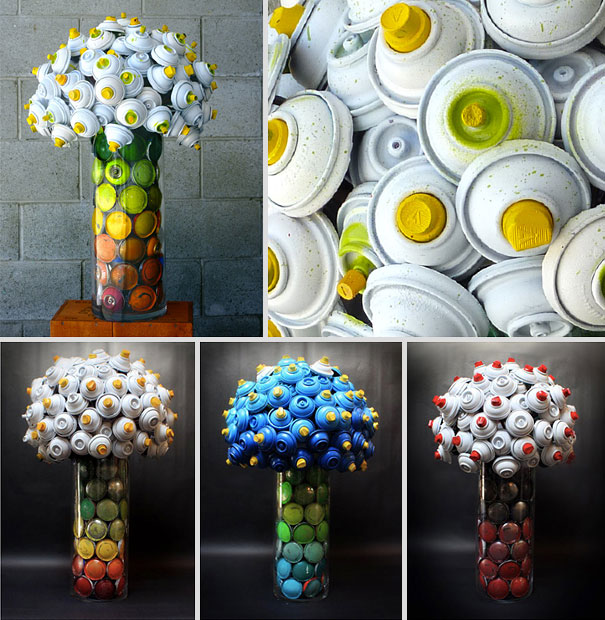
Floral Spray Paint- New way to color your dreams:


    Being a human we always dream of something or the other. Every day we just keep asking us and other “What IF”. Sometimes you feel like changing the color of your favorite flower to your favorite color but have you ever tried to change it? It will be very fascinating when you get to know it is possible without hampering their natural nature.

Yes it is possible today! You just need to spray the color that matches to you as per your party or as per your room to make your loved one feel special without making any changes in the shape, size & smell of the flower and the best part of it is it’s non-toxic in nature so it doesn't destroy the flower. The process is facilitated by Floral Spray Paint. Though the concept of floral spray paint is new to the market it is very interesting to deal with.

FLORAL SPRAY PAINT:

       It is the perfect decorating tool when you cannot find the right color flowers to match your color scheme.


     This technique has been used by professional florists from a long time, but now anyone can find floral spray paint at their local crafts store.
    All you need to do is to decide the color of floral spray that you want, shake the can thoroughly and spray the flowers to be dyed lightly. Two or three or even five light coats are much better than a single heavy coat as you will not only avoid any drips but also will achieve a more natural effect.
Also it is possible to get two tone or even three tone effects if your aim with the spray paint can is good. Just layer the colors from lightest to darkest.
      It is an aerosol which moves through air like any other spray does. It is available in cans which doesn't harm as normal spray paints.


Tuesday, 22 January 2013


Post Harvest Loss: A factor in food security:


The growing food crisis across the world has brought to notice the importance of managing food produced efficiently. Though the obvious solution to the problem may seem to be to increase food production, a more pragmatic approach could lie in preventing the post harvest loss of agricultural produce. Much of the food grown in developing countries never makes it past the farm gate, contributing to food insecurity. If this loss can be reduced significantly we may have found an answer to bridge the gap between demand and supply to increase food availability without requiring additional resources or placing additional burdens on the environment.

Post-harvest loss (PHL) is any loss in quantity or quality that occurs between the time of harvest and the time it reaches the consumer. It happens at every stage of the supply chain, but losses are most significant in the developing countries. Harvesting, drying and storage are all stages which see substantial losses, both quantitative and qualitative. Bio-deterioration by rodents, insects, infestations, fungi, birds, etc. is also a major cause.

Estimation of post harvest losses:


Though the post harvest loss is extremely significant and substantial, it is difficult to measure these losses and qualitative loss being more difficult to measure than quantitative. The impact of quantitative loss affects the developing countries more while the qualitative loss discourages consumers of the developed countries which lead to wastage at various levels. To estimate the loss one has to understand the following factors: the biological and environmental factors involved in post harvest deterioration, use of appropriate post harvest technology procedures that will slow down deterioration and maintain quality and safety of the commodities.

Monday, 21 January 2013


SEED BANKS:


       Did you ever stop to think about what might happen if the crops disappeared? Right now, for example, our wheat supply is dwindling. The world's stockpiles are at their lowest numbers in thirty years. Consumption is exceeding production, and farmers are having a tough time keeping up. But what if it's not? Or, what if a natural disaster wipes out the majority of wheat and other important crops? Scientists think they have hit upon a solution -- seed banks.

Think of a seed bank as a savings account. Seeds are "deposited" into secure storage with the intention of "withdrawing" them in the future when they are needed. Just as you might keep money saved for an unforeseen emergency, scientists are saving up seeds to use for replanting in case certain crops die out or are destroyed. When stored correctly, seeds can remain viable for decades or even centuries.

Case Study of Coleanthus subtilis:


Seed banks may play important roles in conservation of genetic diversity and natural restoration to wetland vegetation as well as to recover endangered plant species. Red data books document extinction and threat of species. The ephemeral species Coleanthus subtilis has not been reported for decades in the vegetation cover of any Austrian habitat. Positive experiences controlling Coleanthus localities documented by older herbarium material generally encouraged the idea to compare (old) herbar material of today highly endangered or extinct plant species with seeds of soil samples collected in corresponding localities. Most of those species, like the ones growing along the shoreline, need unique conditions to survive. Shoreline plants are able to colonize ephemeric semiaquatic environments, That means, conditions alternating between terrestric and hydric (BERNHARDT & POSCHLOD 1993). One characteristic of such plants is their capacity to survive in the soil seed bank during unsuitable conditions. Due to the longevity of seeds, those species remain present for decades (LECK 1989, BERNHARDT & POSCHLOD 1993). Therefore, the soil seed bank contains an important portion of the species diversity as well as the genetic diversity of populations. After its rediscovery the population biology of Coleanthus subtilis was investigated, especially the life cycle, germination, dormancy, presence in soil seed bank and seed bank dynamics.

Result of soil seed bank


We found a number of individuals of Coleanthus subtilis are represented in the soil seed bank. Coleanthus is still living in situ with a high density of seeds in the soil seed bank and it results in a higher appearance of Coleanthus in vegetation cover.

To conclude the study, the investigation shows that species listed as extinct or highly endangered might be recovered in the soil seed bank. This “in situ storage” as seed bank remained in the wetlands is an potential candidate for restoration of genetic variation and diversity of semiaquatic plant species, having high reproduction rates as it is characteristic for colonizing species and they are able to survive for a long time (BERNHARD Tet al. 2004). The reason why they do not grow up is most likely the lack of water level fluctuations (HEINY 1962, 1964, BERNHARDT 1999).

A seedbank stores seeds as a source for planting in case seed reserves elsewhere are destroyed. It is a type of gene bank. The seeds stored may be food crops, or those of rare species to protect biodiversity. The reasons for storing seeds may be varied. In the case of food crops, many useful plants that were developed over centuries are now no longer used for commercial agricultural production and are becoming rare. Storing seeds also guards against catastrophic events like natural disasters, outbreaks of disease, or war. Unlike seed libraries or seed swaps that encourage frequent reuse and sharing of seeds, seedbanks are not typically open to the public.
Stored specimens have to be regularly replanted when they begin to lose viability.
Only a limited part of the world's biodiversity is stored
It is difficult or impossible to store recalcitrant seeds.
There is a need to improve cataloging and data management. The documentation should include identity of the plant stored, location of the sampling, number of seeds stored and viability state. Other information, such as farming systems in which the crops were grown, or rotations they formed, should also be available to future farmers.
Facilities are expensive for third world countries which contain the most biodiversity.
Many of the same issues apply to seed banks as with fallout shelters. With regards to its use as an insurance policy against cataclysmic events, it's highly questionable whether a seed bank would be at all usable in staving off starvation and societal collapse in almost any conceivable situation.

Saturday, 19 January 2013


Forest Gardening is an intensive form of agro-forestry, where trees, shrubs, herbaceous perennials, annuals and climbers all form part of a carefully designed and interconnected agronomic system for growing food and other useful plant products. A forest garden is designed and maintained specifically, not using the normal tenets of gardening, but taking its vision from nature and very much based on a natural ecology of a young forest. It is a food production system based on replicating woodland ecosystems to grow trees, bushes, shrubs, herbs and vegetables that are directly useful to people. The different crops grow on multiple levels in the same area to gain maximum productivity from the available space. Whilst this is a common small scale food production approach in the tropics, models for temperate climates have more recently become popular.